Coastal Aviation vs Auric Air Baggage Allowance: What Safari Travellers Need to Know
Baggage rules can look very different when you move from an international flight to a safari aircraft in Tanzania.
Travellers arriving with a large suitcase and a separate cabin bag can quickly discover that the allowance on the next part of their journey is calculated very differently.
This matters particularly when flying into Serengeti airstrips, where smaller aircraft and restricted baggage compartments mean the total weight and physical size of your luggage both need to be considered.
Two of Tanzania’s best-known safari airlines, Coastal Aviation and Auric Air, currently have different baggage policies.
Understanding those differences before packing can make the start of a fly-in safari considerably easier.
Coastal Aviation Baggage Allowance
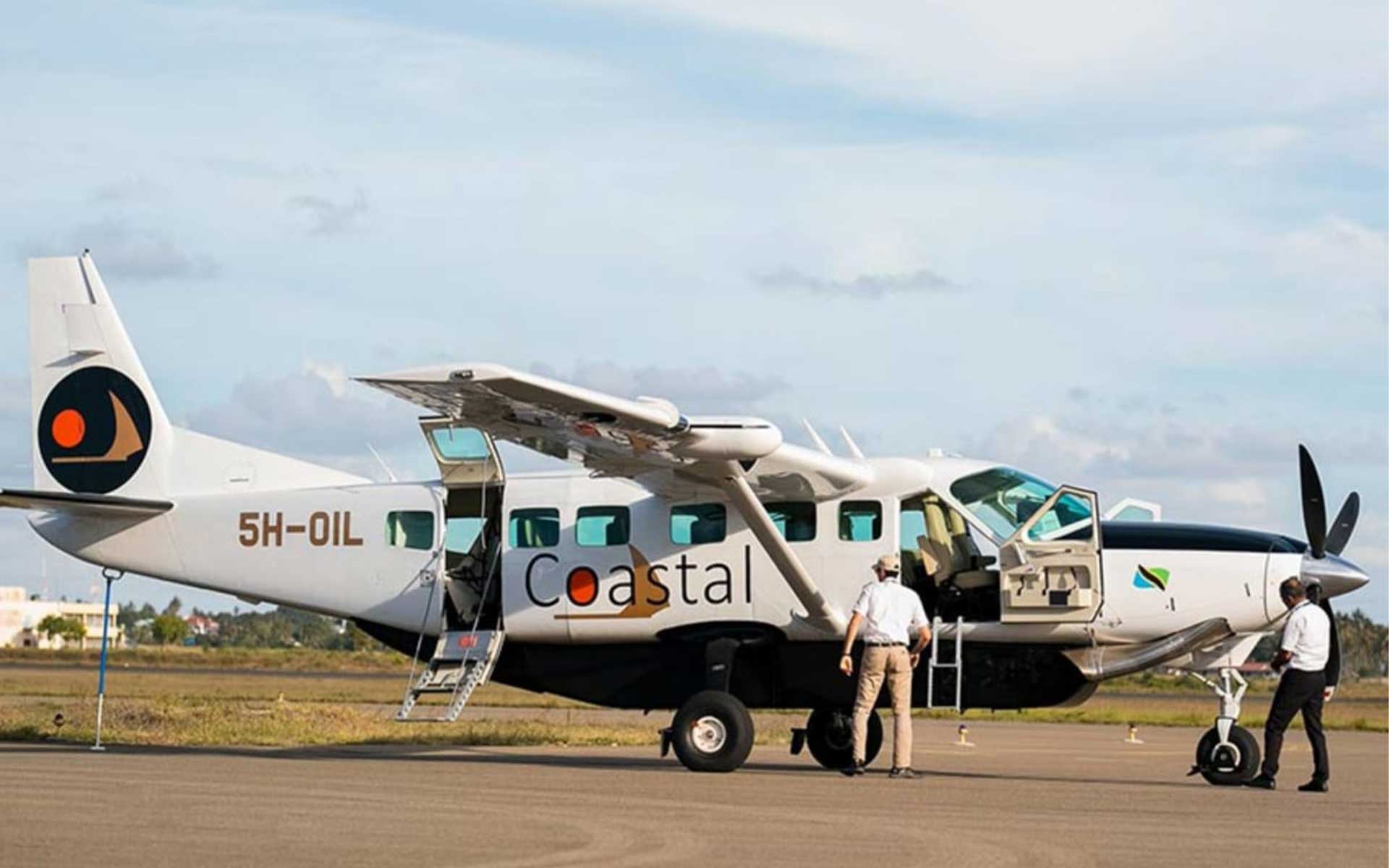
Coastal Aviation currently permits a maximum total baggage allowance of 15kg per passenger, including carry-on luggage.
Its official luggage policy states that soft bags are strongly recommended, although they are not compulsory.
The physical dimensions matter too.
Coastal states that the cargo pod door measures 76cm x 48cm x 29cm, so baggage needs to be able to fit through that opening. A bag can therefore be within the 15kg allowance and still cause a problem if its shape or dimensions prevent it from being loaded.
This is one of the main reasons flexible luggage remains the safest option for safari flights.
For travellers who know they will need more luggage, Coastal also offers an XL premium seat option with an allowance of up to 30kg, subject to availability. Further arrangements may sometimes be possible when organised in advance.
Arriving at the airstrip with unexpected excess baggage is riskier. Coastal states that carriage of additional luggage remains subject to aircraft load and operational considerations, and excess baggage may need to travel on a later flight.
Auric Air Baggage Allowance
Auric Air currently provides a larger standard allowance.
According to the airline’s official baggage policy, passengers receive a total allowance of 20kg per person. Importantly, that figure includes hand luggage, cameras, filming equipment and other personal items.
This means a 20kg checked bag plus a separate camera bag would exceed the standard allowance. Everything being carried needs to be considered within the total weight.
Auric’s current policy also accepts different types of luggage, including suitcases, although soft-sided bags are recommended because they are easier to fit into aircraft baggage compartments.
The current maximum size per piece is 90cm x 65cm x 35cm.
Travellers who need additional luggage can pre-book excess baggage in 10kg increments. Auric currently lists charges of $30 per 10kg slab on coast routes and $60 per 10kg slab on safari or bush routes, with a maximum of four additional slabs per passenger. For larger requirements, the airline also provides a freight-seat option.
Because rates and policies can change, these should be checked directly with Auric before travel.
Coastal Aviation vs Auric Air: The Main Difference
The most obvious difference is the standard weight allowance.
Coastal Aviation currently allows 15kg total, including carry-on luggage.
Auric Air currently allows 20kg total, again including hand luggage and other personal items such as camera equipment.
Neither allowance should be compared directly with the checked-baggage figure on an international airline ticket because safari airlines often calculate everything you carry within one combined allowance.
For photographers in particular, this is easy to overlook. Cameras, lenses, batteries and other equipment can account for a significant part of the available weight before clothing is included.
Do You Need a Soft Bag for a Tanzania Safari Flight?
A soft-sided holdall or duffel remains the most practical choice.
However, travellers should look at the actual airline rule rather than relying on a blanket assumption that every Tanzania safari airline bans suitcases.
Coastal Aviation currently strongly recommends soft luggage but does not describe it as compulsory in its official policy. Auric Air states that all bag types are accepted within its size restrictions, while still recommending soft-sided luggage for easier loading.
The practical advantage of a soft bag is flexibility. Small safari aircraft often use compact cargo pods rather than the large baggage holds found on commercial jets. A bag that can compress and adapt to the available space is easier to load.
For travellers continuing onto several safari flights, soft luggage remains the safest choice even where it is not formally mandatory.
What About Camera Equipment?
Camera equipment is particularly important because it may form part of the total allowance.
Auric explicitly includes cameras and filming equipment within its 20kg total allowance. Coastal’s 15kg limit includes carry-on luggage, meaning travellers should not assume a separate cabin allowance is available in addition to the 15kg.
If wildlife photography is an important part of the trip, weigh camera equipment before leaving home rather than estimating its weight at check-in.
Passengers carrying substantial photography equipment should also discuss additional baggage options with the airline before travelling.
What Happens If Your International Luggage Is Too Heavy?
This is common on safari itineraries.
An international airline may permit significantly more luggage than the safari airline being used for the next sector, leaving travellers with belongings they do not need in the bush.
One solution is to pack a smaller safari bag separately and arrange secure storage for larger luggage while travelling.
Coastal Aviation currently states that it provides luggage storage at its Dar es Salaam Terminal 1 airport office for belongings that are not required during the safari. Auric Air also states in its current FAQs that secure storage is available at its Dar es Salaam Terminal 1 office, subject to advance enquiry.
Whether this works for your itinerary depends on where you enter and leave Tanzania, so it needs to be planned in advance rather than assumed.
How to Pack for a Safari Flight
The simplest approach is to start with the safari flight allowance rather than the international allowance.
Choose luggage that fits the requirements of the safari airline, weigh everything together, including hand luggage and cameras, and leave enough margin for items that may be added during the trip.
Light clothing also helps. Many safari lodges provide laundry services, reducing the need to pack a fresh outfit for every day of a longer safari.
Safarisoko’s guide to what to pack and wear on safari covers the wider packing requirements, while our guide to how fly-in safaris work in Tanzania explains what to expect when travelling between safari airstrips.
Check the Airline Policy Before You Fly
Baggage policies are operational rules rather than fixed travel advice. Airlines can amend allowances, excess-baggage charges or aircraft requirements.
Always check the current policy for the airline operating your specific flight shortly before departure.
For Coastal Aviation, use the airline’s official luggage policy.
For Auric Air, use the official Auric baggage policy.
Safarisoko also provides information on Coastal Aviation, Auric Air and other safari airlines operating across Tanzania and East Africa, allowing travellers to compare flight options while planning the wider itinerary.
Getting the luggage right is a small part of safari planning, but it is one of the easiest things to resolve before travelling. Check the allowance, choose a bag that works for the aircraft and pre-arrange any additional luggage rather than leaving it until check-in.