Fly-in safaris in Tanzania are designed around efficiency. Instead of spending days travelling overland between destinations, you move quickly between regions by small aircraft, maximising time on safari.
For many travellers, especially those visiting the Serengeti or remote parks, flying is not a luxury—it is the most practical way to experience multiple locations within a limited timeframe.
What Is a Fly-In Safari?
A fly-in safari uses scheduled or charter flights to connect different safari destinations, typically between:
- Major airports (such as Dar es Salaam or Arusha)
- Regional airstrips located within or near national parks
Instead of long road transfers, travellers fly directly into the heart of safari areas, often landing just minutes from their lodge.
Why Choose a Fly-In Safari in Tanzania?
Save Time Across Long Distances
Tanzania is large, and safari regions are widely spread. Journeys that would take 8–12 hours by road can often be reduced to 1–2 hour flights.
This allows:
- More time for game drives
- Less travel fatigue
- Easier multi-destination itineraries
Access Remote and Exclusive Locations
Many of Tanzania’s most sought-after safari areas are not easily accessible by road.
Fly-in safaris provide direct access to:
- Remote regions of the Serengeti
- Private concessions and conservancies
- Areas with limited vehicle access
This often results in quieter, less crowded safari experiences.
Seamless Lodge-to-Lodge Travel
Fly-in safaris are structured around smooth transitions.
Typical flow:
- Arrive at an airstrip
- Meet a lodge guide
- Transfer directly to camp (often as a game drive)
There is minimal waiting, and logistics are usually handled in advance.
What Flights Are Like on a Safari
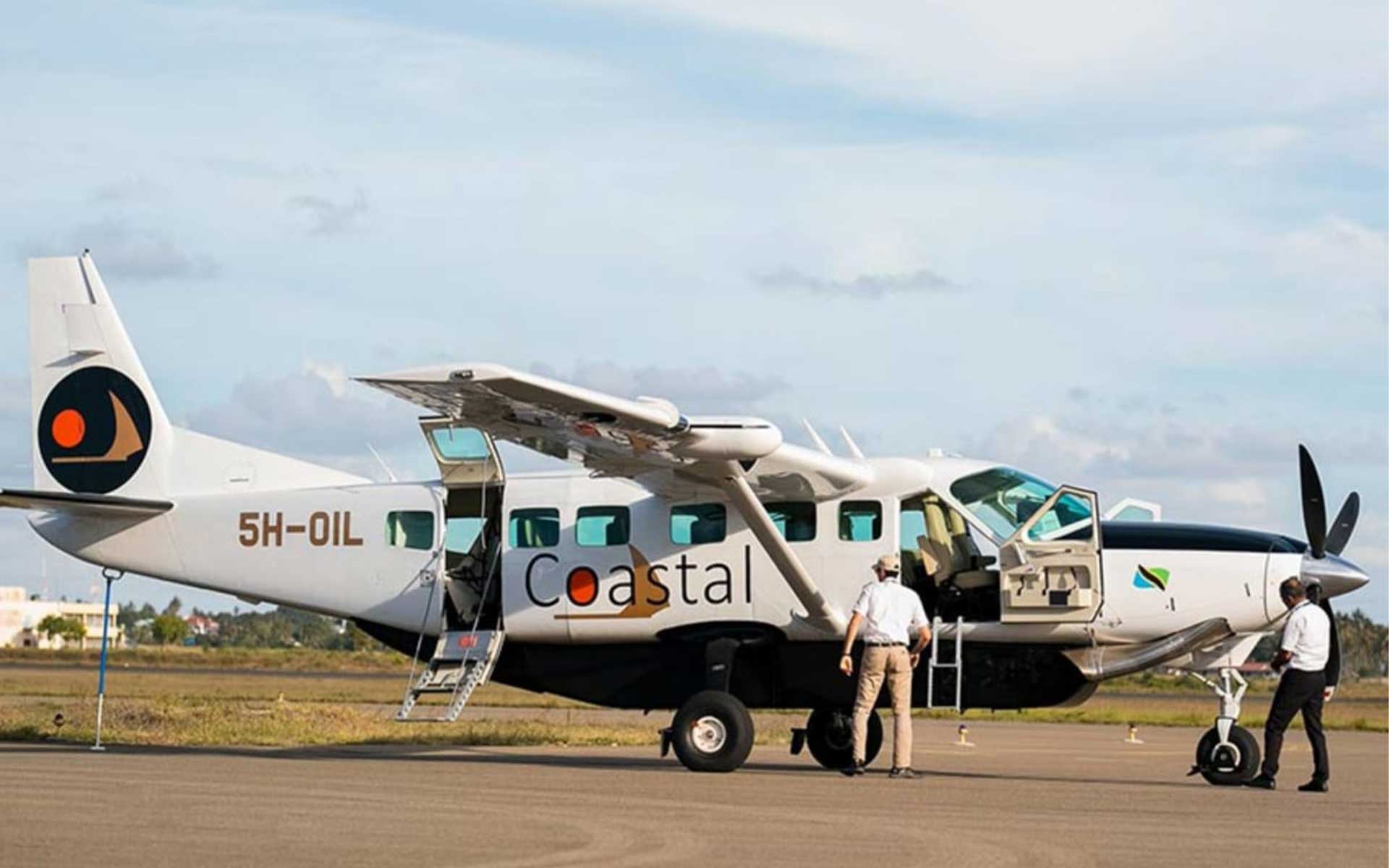
Flights operate using small aircraft designed for short runways and regional travel.
You can expect:
- Aircraft such as Cessna Caravan or similar
- Between 8–13 passengers
- Window seats for all passengers
- Low-altitude flying with clear views of landscapes below
Flights may include multiple stops, dropping off or collecting passengers at different airstrips.
Are Flights Direct?
Not always.
Scheduled safari flights often follow a circuit rather than a direct route. This means:
- You may land at multiple airstrips along the way
- Total travel time varies depending on routing
- Flights remain efficient despite stops
Private charters offer direct routing but are significantly more expensive.
Baggage Rules for Fly-In Safaris
Baggage restrictions are stricter than commercial flights.
Typical limits include:
- Around 15 kg total luggage per person
- Soft-sided bags only
- Limited carry-on allowance
This is due to aircraft size and weight distribution requirements.
Packing light is essential, and most lodges offer laundry services to compensate.
What Happens When You Land?
Arrival at a safari airstrip is simple and informal.
- No large terminals or crowds
- Your guide meets you directly at the aircraft
- Transfers to your lodge begin immediately
In many cases, the safari effectively starts the moment you land.
When Fly-In Safaris Make the Most Sense
Fly-in safaris are particularly valuable when:
- Combining multiple parks or regions
- Travelling on a shorter schedule
- Visiting remote areas like northern Serengeti
- Prioritising comfort and efficiency over cost
For longer trips focused on a single area, overland safaris may still be practical.
Best Destinations for Fly-In Safaris in Tanzania
Fly-in safaris are commonly used across:
- Serengeti National Park (multiple airstrips)
- Northern circuit parks via Arusha
- Southern parks such as Ruaha and Nyerere
These destinations are either far apart or logistically complex by road.
What Fly-In Safaris Do Not Include
Despite the convenience, there are a few limitations:
- Less flexibility than self-drive itineraries
- Fixed flight schedules
- Baggage constraints
However, these are typically outweighed by time savings and ease of travel.
Final Thought: Efficiency Without Compromising Experience
Fly-in safaris are not just about speed. They fundamentally change how a trip feels.
By removing long travel days, they create space for:
- More time in the bush
- Better-paced itineraries
- Seamless transitions between locations
For many travellers, this results in a more imme