
Framing the Question Correctly
The comparison between Kilimanjaro International Airport and Arusha Airport is often approached as a choice. In practice, this framing is misleading. These airports do not compete; they operate at different levels within the same system.
Understanding how they function together removes confusion and clarifies how travel in northern Tanzania is structured.
Kilimanjaro as the International Gateway
Kilimanjaro handles the majority of international arrivals into the northern safari region. Its infrastructure supports larger aircraft, customs processing, and long-haul connections. For most travellers, this is the first point of entry.

Its location, positioned between Arusha and Moshi, makes it accessible without being directly embedded in either town. Transfers from the airport are straightforward, typically forming the first short movement within the itinerary.
Arusha as the Operational Hub
Arusha Airport serves a different purpose. It is smaller, more focused, and directly connected to the mechanics of safari travel. This is where the transition from commercial aviation to bush flying takes place.
Flights departing from Arusha connect to airstrips across the Serengeti and other parks. Aircraft are smaller, routes are more flexible, and the environment shifts from structured to functional.
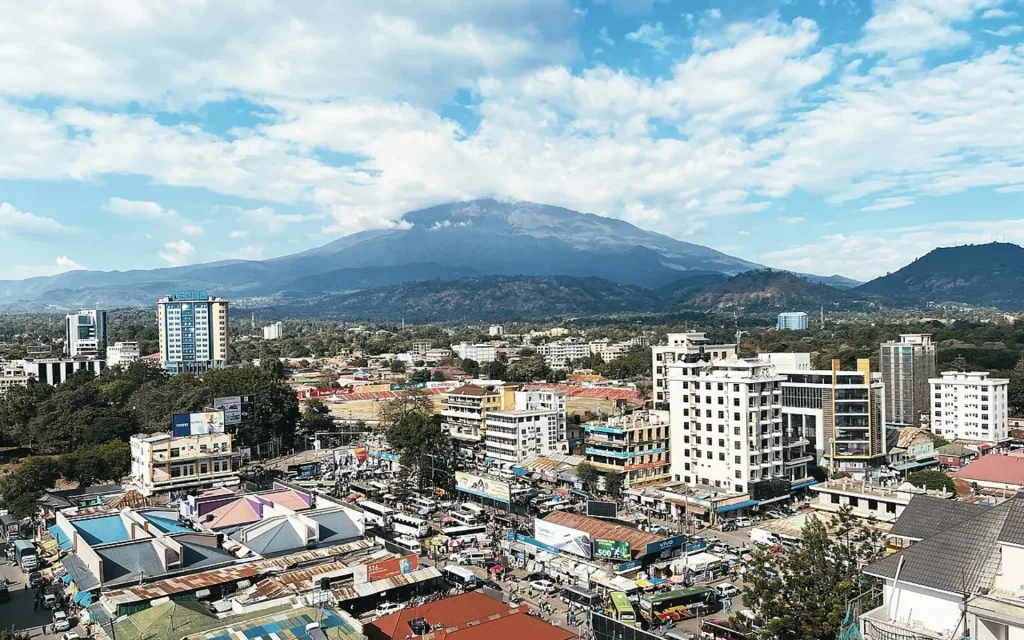
The Transition Between the Two
Most itineraries involve a transfer from Kilimanjaro to Arusha shortly after arrival. This transfer is not long, but it represents a shift in how travel operates. From this point onward, logistics become more closely tied to geography and less to standard airline scheduling.
Some flights do operate directly from Kilimanjaro into the Serengeti, but these are less common and offer fewer options. Arusha remains the primary departure point for internal safari flights.
Practical Differences That Affect Planning
The distinction between the two airports affects timing, routing, and accommodation choices. Early morning flights from Arusha may require overnight stays nearby, while late international arrivals into Kilimanjaro may necessitate an additional night before continuing.
These considerations are not obstacles but structural elements. Planning around them creates smoother transitions and reduces unnecessary pressure on the schedule.
When Each Airport Becomes Relevant
Kilimanjaro is relevant at the start and end of the journey. Arusha becomes relevant in the middle, when movement into and between parks takes place. The two are connected by short transfers but serve entirely different functions.
Attempting to choose one over the other misunderstands how the system operates. Both are required, and both contribute to the overall flow of the itinerary.
Removing Friction From Travel Planning
Clarity around these roles simplifies decision-making. Instead of evaluating airports as options, they can be understood as stages within a process. Arrival, transition, and onward travel each have their own infrastructure, and each is handled by a different point within the network.
When this structure is recognised, planning becomes more direct. Routes align naturally, transfers make sense, and the itinerary holds together without unnecessary adjustments.