
The Reality of Getting Around Tanzania
Planning travel in Tanzania starts with removing a common assumption: that moving between destinations is similar to Europe or other well-connected regions. It is not. Distances are large, infrastructure is uneven, and the most efficient way to move between safari locations is almost always by air. Once this is understood, itineraries begin to make sense.
The country’s travel system is built around a small number of entry points, primarily Kilimanjaro International Airport, Abeid Amani Karume International Airport, and Julius Nyerere International Airport. From these, movement shifts quickly away from commercial aviation into a network that feels closer to logistics than tourism.
Airports, Airstrips, and Why the Distinction Matters
Large airports handle arrivals, but they are not where safaris begin. That transition happens at smaller departure points, often Arusha Airport, where aircraft scale down and routes become more flexible. From there, flights move into the bush, landing at airstrips positioned within or near parks.
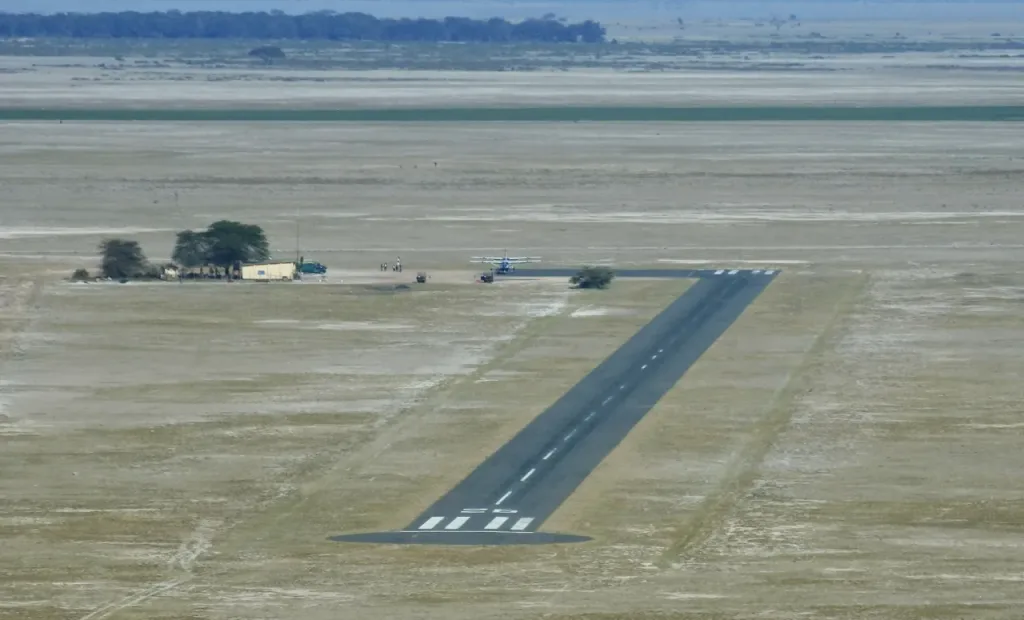
These airstrips are functional rather than developed. There are no terminals in the conventional sense, and arrivals are coordinated with guides rather than taxis. The shift is immediate: the infrastructure disappears, and the landscape becomes the focus.
How Routes Actually Work
Flight paths in Tanzania rarely operate as simple point-to-point journeys. A route from Zanzibar to the Serengeti may include multiple short stops, each lasting only a few minutes. Passengers remain onboard while others disembark, and the aircraft continues on. This is normal and built into scheduling.
This structure allows airlines to serve multiple remote locations efficiently, but it also means that travel times vary. A journey that appears short on a map can take several hours once routing is considered. The trade-off is access, places like the Serengeti National Park would otherwise require full days of overland travel.
When Flying Becomes Essential
There is a narrow window where driving makes sense, mainly within the northern circuit between parks such as Tarangire and Ngorongoro. Beyond that, the argument for flying becomes structural rather than optional. Attempting to connect Zanzibar with mainland parks without flying introduces complexity that outweighs any cost savings.
Flying is not simply about speed; it is about preserving the integrity of the itinerary. Time saved in transit becomes time spent in the environment that the trip is built around.
Airlines and Scheduling Patterns
Domestic airlines operate on semi-fixed schedules, but flexibility is built into the system. Departure times can shift, routes can adjust, and aircraft assignments may change. This is not a sign of instability; it reflects the realities of operating across remote regions with variable demand.
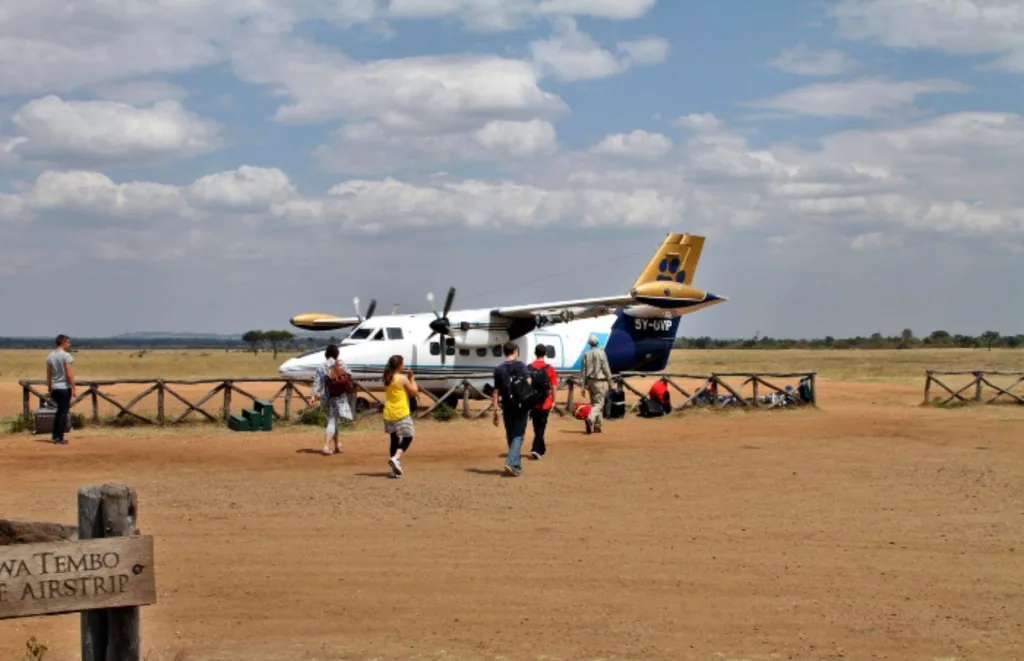
Flights are typically scheduled around daylight hours, both for safety and visibility on landing. As a result, itineraries tend to follow a rhythm: morning departures, midday arrivals, and afternoons reserved for safari activity.
Building an Itinerary Around Flights
The most efficient safaris are designed around flight logic rather than forcing flights into a pre-determined plan. Movement should follow geography: northward through the Serengeti, outward to Zanzibar, or inward from coastal entry points.
A well-structured itinerary avoids repetition. It moves forward, connects naturally, and uses flights to eliminate unnecessary transitions. When this alignment is correct, travel becomes almost invisible within the broader experience.