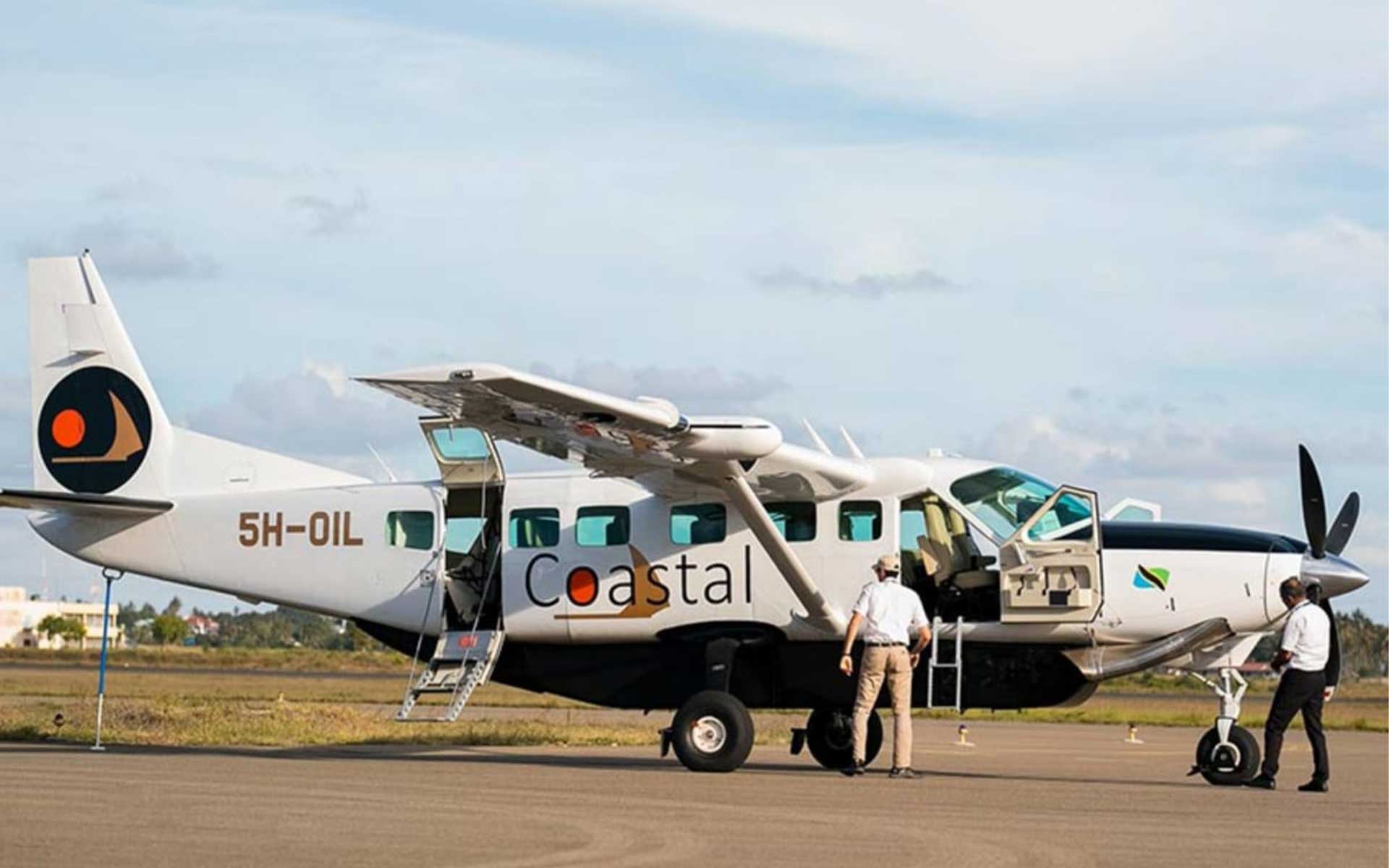
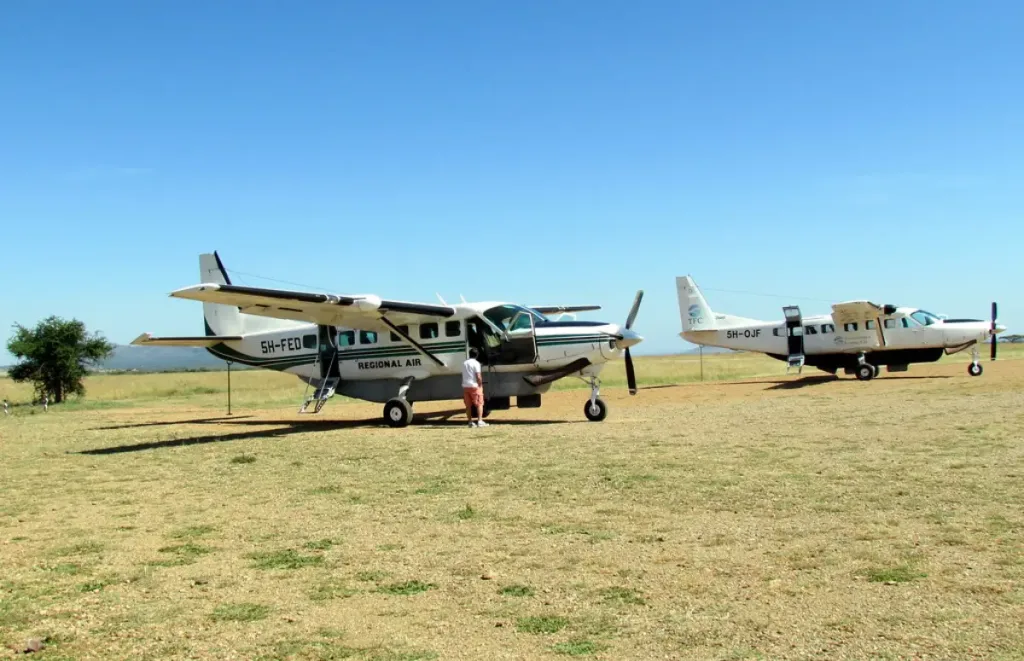
 Understanding Serengeti airstrips is one of the most overlooked parts of planning a safari. Travellers often focus on lodges and wildlife, but where you fly into directly shapes your experience on arrival.
The Serengeti does not have a single main airport. Instead, it operates through a network of small airstrips spread across different regions. Each one serves a specific area of the park, and choosing the right one can save hours of travel time.
Why Serengeti Airstrips Matter for Your Safari
The Serengeti covers thousands of square kilometres. Driving between regions can take most of a day, which makes flight planning essential.
Choosing the correct airstrip allows you to:
- Minimise transfer time to your lodge
- Maximise time on game drives
- Align your location with seasonal wildlife movement
- Avoid unnecessary internal travel
In most cases, your airstrip choice should match both your lodge location and the time of year you are travelling.
Key Serengeti Airstrips and What They Serve
Seronera Airstrip (Central Serengeti)
Best for: Year-round safaris and first-time visitors
Seronera is the most commonly used airstrip in the Serengeti. Located in the central region, it offers:
- Consistent wildlife viewing throughout the year
- High density of predators, including lions and leopards
- The widest range of flight connections
If you are unsure where to start, Seronera is often the most reliable entry point.
Kogatende Airstrip (Northern Serengeti)
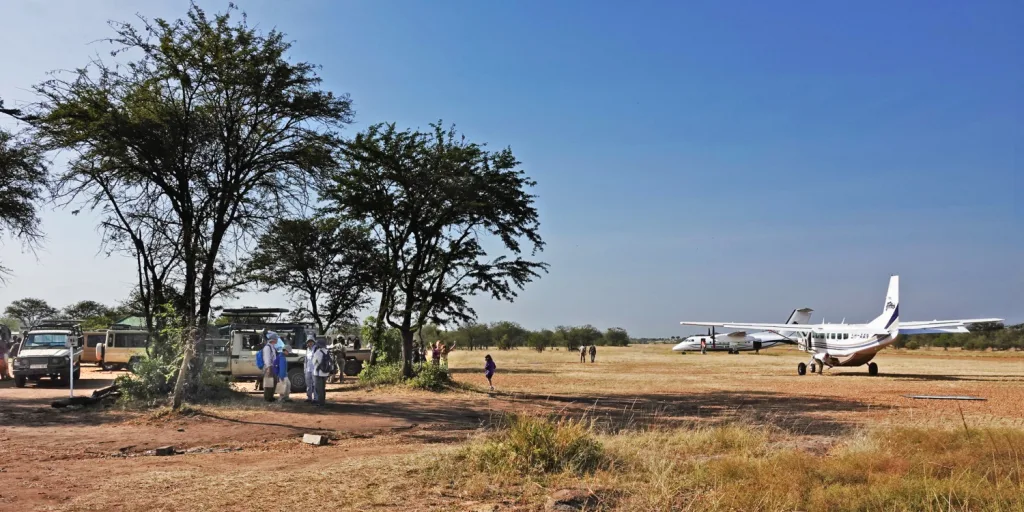
Best for: Great Migration river crossings (June to October)
Kogatende serves the northern Serengeti near the Mara River.
This area is known for:
- Dramatic wildebeest river crossings
- Lower visitor density than central areas
- Seasonal peak demand during migration months
Flights into Kogatende are highly sought after during peak migration season, so planning ahead is critical.
Lamai Airstrip (Far Northern Serengeti)
Best for: Remote northern safaris and quieter migration access
Lamai is located further north than Kogatende and serves more remote camps.
It offers:
- Access to less crowded migration viewing areas
- A more exclusive safari feel
- Proximity to quieter sections of the Mara River
This airstrip is typically used for high-end, lodge-based itineraries.
Grumeti / Sasakwa Airstrips (Western Corridor)
Best for: Private concessions and exclusive safari experiences
Airstrips in the western Serengeti, including Sasakwa, provide access to private reserves.
This region offers:
- Fewer vehicles and more controlled access
- Resident wildlife year-round
- A quieter alternative to central Serengeti
These airstrips are often used as part of premium, multi-location itineraries.
Ndutu Airstrip (Southern Serengeti)
Best for: Calving season (December to March)
Ndutu serves the southern plains, particularly during calving season.
Key highlights include:
- Thousands of newborn wildebeest during peak months
- High predator activity
- Open landscapes ideal for photography
This airstrip is highly seasonal and less commonly used outside calving months.
How Flights Between Serengeti Airstrips Work
Flights within the Serengeti are not always direct.
Instead, they operate as multi-stop circuits, meaning:
- You may land at several airstrips along the way
- Routes are adjusted based on passenger demand
- Total journey time varies depending on stops
Despite this, flights remain significantly faster than overland travel.
How to Choose the Right Serengeti Airstrip
Choosing the right airstrip depends on three factors:
- Lodge Location
Your airstrip should be as close as possible to your lodge to avoid long transfers after landing.
- Time of Year
Wildlife movement changes throughout the year. Align your airstrip with where the action is.
- Itinerary Flow
If you are visiting multiple regions, your airstrips should follow a logical route to avoid backtracking.
Common Mistakes When Booking Serengeti Flights
- Selecting flights based on price rather than location
- Flying into central Serengeti when staying in the north
- Ignoring transfer times from airstrip to lodge
- Not factoring in seasonal wildlife patterns
These mistakes can lead to unnecessary travel time and missed opportunities.
What to Expect When You Land at a Serengeti Airstrip
Serengeti airstrips are simple and functional.
- No large terminals or infrastructure
- Minimal formalities
- Immediate pickup by your lodge guide
Your safari effectively begins as soon as you step off the aircraft.
The Airstrip Shapes the Experience
Choosing the right Serengeti airstrip is not just a logistical decision. It determines how quickly you reach wildlife, how much time you spend driving, and how your itinerary flows.
Get this right, and everything else becomes easier.