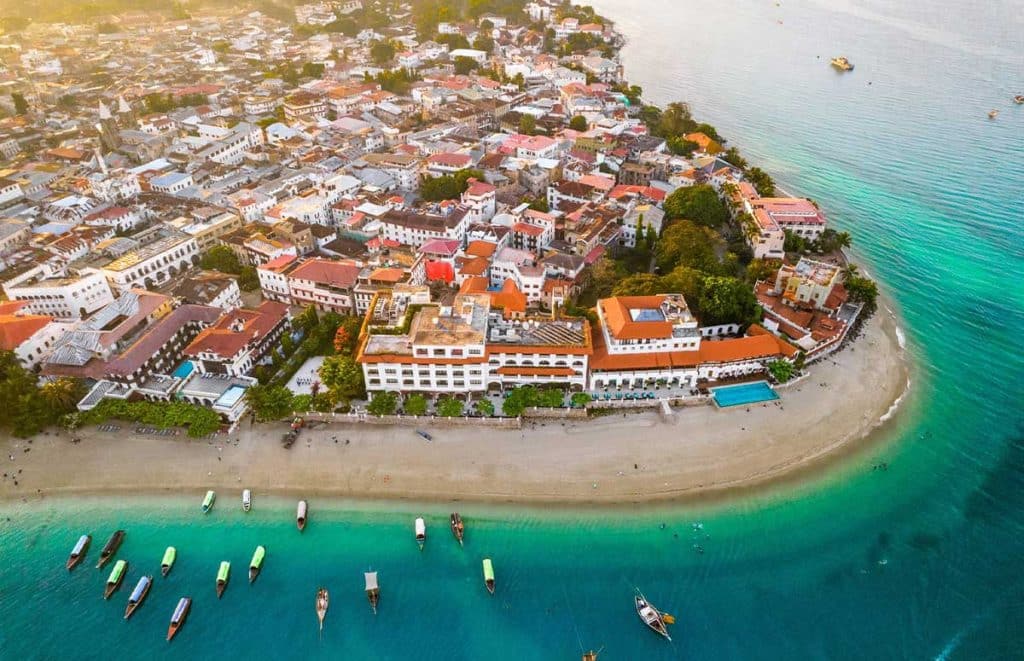
Visitors arriving in Zanzibar usually begin their journey in Stone Town, the island’s historic cultural centre.
Located just minutes from Abeid Amani Karume International Airport, Stone Town is one of East Africa’s most fascinating historic cities. Its narrow alleyways, coral stone buildings, and intricately carved doors reflect centuries of Swahili, Arab, Persian, and European influence.
Recognised as a UNESCO World Heritage Site, the town offers travellers a chance to explore Zanzibar’s cultural history before heading to the island’s famous beaches.
Explore the Historic Streets of Stone Town
One of the best ways to experience Stone Town is simply by walking through its labyrinth of narrow streets.
The historic district was built from coral rag stone, with buildings packed closely together along winding alleyways. Many doors feature elaborate carvings that once symbolised the wealth and influence of the families who lived there.
Exploring the streets reveals small mosques, hidden courtyards, spice shops, and traditional Swahili homes.
Because of the compact layout, most visitors explore Stone Town on foot.
Visit the Old Fort and Forodhani Gardens
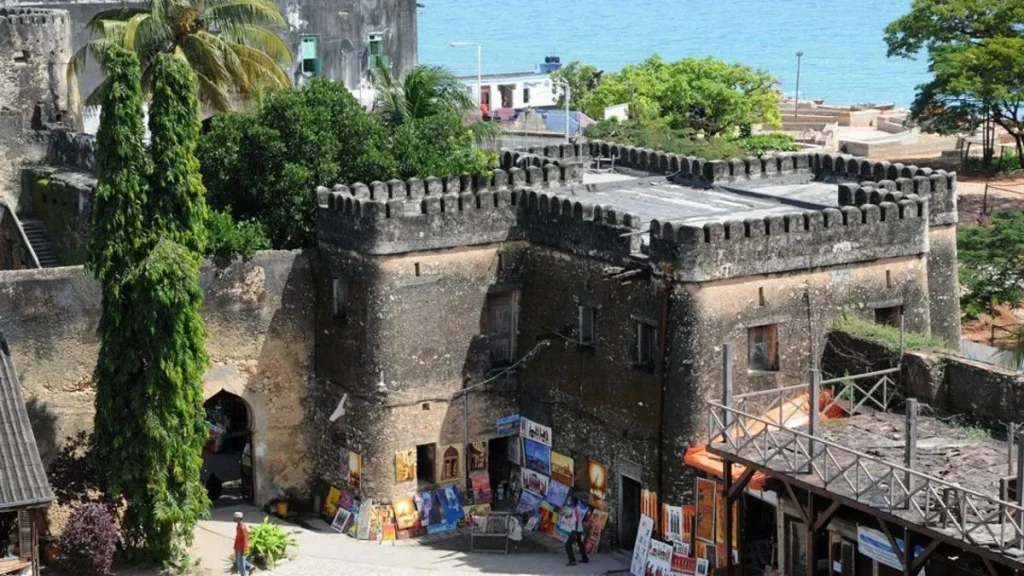
At the waterfront you’ll find two of Stone Town’s most recognisable landmarks.
The Old Fort of Zanzibar dates back to the late 17th century and remains one of the oldest structures in the city. Today it hosts small shops, cultural events, and art exhibitions.
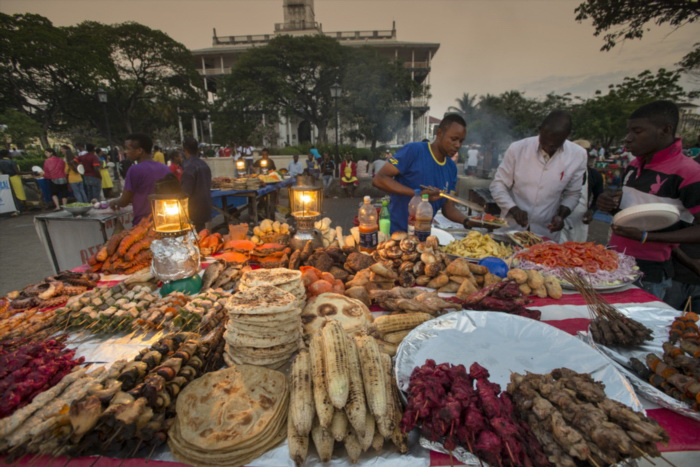
Next to the fort are Forodhani Gardens, which transform into a vibrant evening food market after sunset.
Local vendors prepare grilled seafood, Zanzibari pizza, and sugarcane juice, making it one of the best places to experience local cuisine.
Discover the House of Wonders and the Sultan’s Palace
Stone Town’s waterfront is lined with historic buildings that reflect Zanzibar’s time as a major Indian Ocean trading hub.
The House of Wonders once served as a ceremonial palace for the Sultan of Zanzibar and remains one of the town’s most recognisable landmarks.
Nearby, the Palace Museum offers insight into the royal history of the island and the era when Zanzibar was ruled by Omani sultans.
Visit the Freddie Mercury House
Music fans often visit the house where Freddie Mercury was born in 1946.
Although he spent much of his childhood elsewhere, the building has become a popular stop for visitors exploring Stone Town.
Today it houses a small museum dedicated to the life and career of the legendary singer.
Take a Spice Tour Outside Stone Town
Zanzibar is often referred to as the “Spice Island”, and many travellers take guided spice tours in the countryside just outside Stone Town.

These tours explore small plantations growing cloves, nutmeg, cinnamon, vanilla, and tropical fruits. Visitors learn how the spices are cultivated and used in traditional Swahili cooking.
Spice tours are usually half-day excursions and provide a fascinating introduction to the island’s agricultural history.
How Long Should You Spend in Stone Town?
Most travellers spend one or two nights in Stone Town before heading to the island’s beaches.
This allows enough time to explore the historic streets, visit cultural landmarks, and experience the evening food market before continuing to beach areas such as Nungwi, Kendwa, or the east coast lagoons.
For travellers arriving from mainland safari destinations, Stone Town provides a fascinating cultural contrast before the slower pace of Zanzibar’s beaches.